A URL (website address) is more than just a webpage’s location. A well-structured URL helps users understand where they are, makes links easier to share, and lets search engines like Google crawl and understand a website more efficiently.
For Malaysian businesses building a new website or improving their SEO, understanding URL structure, domain names, and SEO-friendly URL best practices can help you build a cleaner, more scalable website from the start.
///
What Is a URL?
URL stands for Uniform Resource Locator. In simple terms, it is the web address used to locate a specific resource on the internet.
For example: https://www.example.com/web-design
When you enter this URL into a browser, it tells the browser where to find that webpage and which protocol to use to access it.
A URL can point to more than just webpages. It may also lead to:
- Images
- Videos
- PDF files
- Documents
- Downloads
- Other online resources
///
What Is the Structure of a URL?
A typical website URL can be divided into several parts: https://www.example.com/services/seo-malaysia
1. Protocol
https://
The protocol defines how the browser and website transfer information. Most modern websites use HTTPS, which encrypts data transmitted between users and the website.
Read More: HTTP vs HTTPS and Its Impact on SEO
///
2. Subdomain
www.
A subdomain is an optional section placed before the main domain. Besides www, businesses may use subdomains such as:
- blog.example.com
- shop.example.com
///
3. Domain Name
example.com
The domain is the website’s main address and usually represents the business or brand. For companies targeting customers in Malaysia, common options include:
- .com
- .my
- .com.my
A Malaysian country-specific domain can provide users with a clearer indication that the website serves the Malaysian market, although the domain extension itself should not be treated as a major SEO ranking factor.
///
4. URL Path
/services/seo-malaysia
The path identifies a particular page or section of the website.
For example: example.com/services/seo
is much easier to understand than: example.com/page?id=84721
Google recommends using simple and descriptive URLs where possible.
///
What Is the Difference Between a URL and a Domain Name?
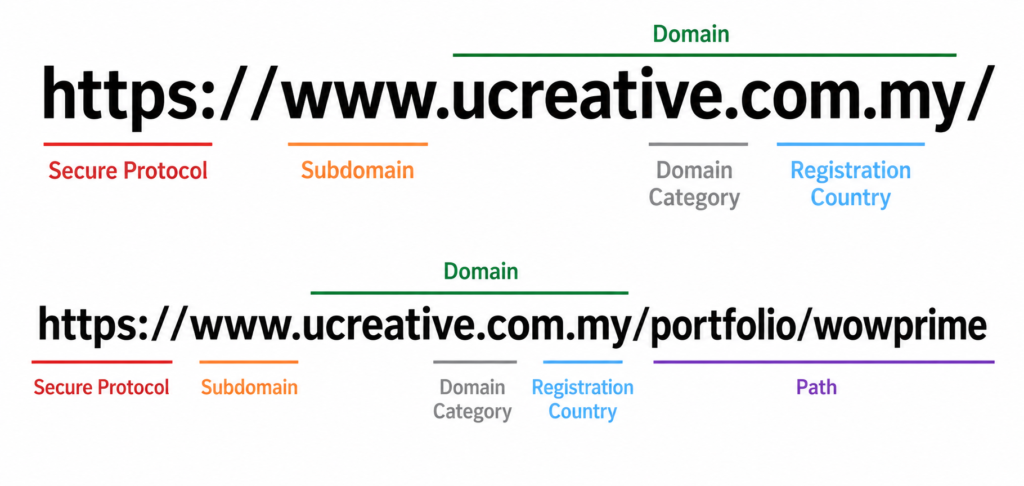
A domain name is only one part of a URL. For example:
- Domain: ucreative.com.my
- URL: https://ucreative.com.my/services/seo
Think of the domain as the building’s address, while the full URL tells you exactly which room or section you want to visit.
This distinction matters when planning a website structure because one domain can contain hundreds or thousands of individual URLs.
///
Why Do We Use Domain Names Instead of IP Addresses?
Web servers communicate using IP addresses, which may look something like: 192.0.2.1
Remembering numerical IP addresses for every website would be impractical.
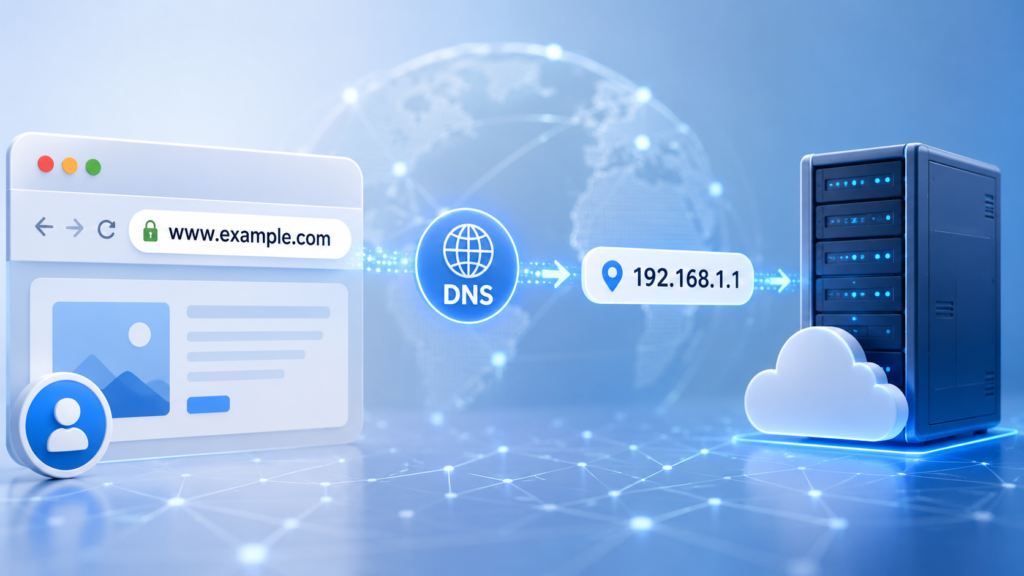
The Domain Name System (DNS) connects human-readable domain names with the corresponding server IP addresses. This allows users to type a simple domain such as:
example.com instead of remembering a sequence of numbers.
Read More: How DNS Settings Work in Malaysia?
///
Does URL Structure Affect SEO?
Yes, but it is important to understand the extent of its impact.
A good, SEO-friendly URL structure helps Google crawl and understand your website, while descriptive URLs also help users understand what a page is about before clicking.
However, adding keywords to a URL does not automatically improve Google rankings. Google states that keywords in a domain name or URL path alone have very little ranking impact.
The main objective should therefore be creating URLs that are:
- Easy to understand
- Easy to crawl
- Consistent
- Descriptive
- Useful to visitors
///
How to Create an SEO-Friendly URL?
a) Keep URLs Short and Clear
Avoid unnecessarily long URLs with excessive folders, IDs, or parameters.
- Better: example.com/seo-malaysia
- Avoid: example.com/category/services/page?id=23874&type=seo
Shorter URLs are generally easier to read, remember, and share.
///
b) Use Descriptive Keywords Naturally
Your URL should clearly describe the page. For example, a Malaysian SEO service page could use: example.com/seo-malaysia
rather than: example.com/service123
The goal is clarity, not inserting as many keywords as possible.
///
c) Use Hyphens Between Words
Google recommends using hyphens (-) instead of underscores (_) when separating words in URLs.
- Recommended: example.com/web-design-malaysia
- Avoid: example.com/web_design_malaysia
///
d) Use Lowercase URLs
URLs are case-sensitive in certain server configurations, meaning: example.com/SEO
And example.com/seo may be treated as separate URLs. Using lowercase consistently reduces unnecessary URL variations and makes website management easier.
///
e) Remove Unnecessary Words
Words such as “a”, “the”, “and”, or “of” can often be removed when they don’t help explain the page.
For example: example.com/benefits-of-seo-for-business
could be simplified to: example.com/seo-benefits-business
However, readability should always come first. Do not remove words if doing so makes the URL confusing.
///
f) Avoid Unnecessary URL Parameters
E-commerce and dynamic websites can sometimes generate URLs containing multiple parameters.
For example: example.com/products?category=1&sort=2&id=8932
Google recommends keeping unnecessary parameters to a minimum because extremely complex URL structures can make crawling less efficient.
///
Do Malaysian Businesses Need a Custom Domain?
For most businesses, yes. Using your own domain provides several advantages:
- Stronger branding: Customers can easily associate the website with your company.
- More professional appearance: A dedicated business domain looks more credible than operating under another platform’s subdomain.
- Easier marketing: Short, memorable domains are easier to include in advertisements, social media, and business materials.
- Long-term ownership: Your domain becomes part of your company’s digital presence.
For businesses investing in website design, SEO, or digital marketing in Malaysia, choosing a suitable domain and planning the URL structure early can also prevent complicated URL changes later.
///
FAQ
What does URL mean?
URL stands for Uniform Resource Locator. It is the address used to locate a webpage or another resource on the internet.
Is a URL the same as a website address?
Yes. In everyday usage, “URL” and “website address” are commonly used to describe the same thing.
How can I find a URL on my phone?
On Safari or Chrome, tap the browser’s address bar while viewing the page. The complete URL will appear and can normally be copied or shared.
Does having keywords in a URL improve SEO?
Keywords can make a URL easier for users to understand, but they aren’t a major ranking factor on their own. Focus on creating descriptive, logical URLs rather than keyword-stuffed URLs.
What is the best URL structure for SEO?
A good SEO URL should be simple, descriptive, consistent, and easy to read.
For example: example.com/web-design-malaysia
is preferable to: example.com/index.php?id=58392&category=4
Google specifically recommends descriptive URLs, hyphens between words and avoiding unnecessary URL parameters.