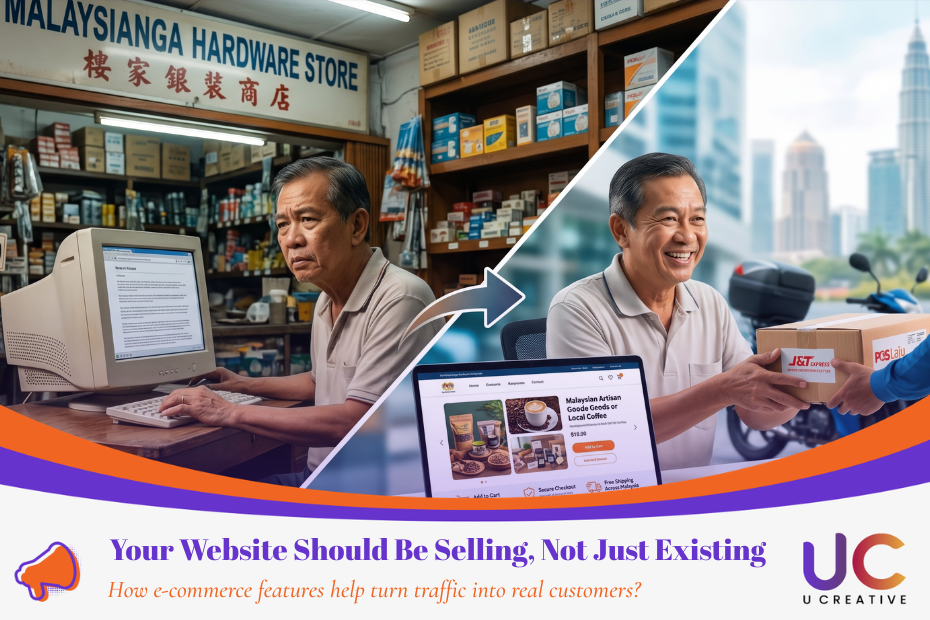
Many Malaysian businesses already have a website. However, having a website alone does not guarantee sales.
In fact, one of the biggest problems in today’s digital market is that many company websites still function like online brochures rather than real business tools. They may look visually attractive, but they fail to convert visitors into paying customers.
This is especially common among SMEs in Malaysia. Business owners invest in web design, upload a few company details, add a WhatsApp button, and assume the website is complete. But after months or even years, they realize the website generates little to no actual revenue.
So what is the real problem?
The answer is simple: most business websites lack the e-commerce features modern customers expect.
Modern Customers Want Speed and Convenience
Consumer behavior has changed significantly over the past few years.
Today’s users do not want to wait hours for replies just to ask for pricing or product availability. Most people prefer a faster and more convenient buying experience.
Before making a purchase, customers usually want to:
- View product or service pricing immediately
- Compare options quickly
- Make payments online
- Place orders without manual follow-ups
- Receive instant confirmation
If your website only says “Contact Us for More Information,” many users will simply leave and visit a competitor instead.
This is one of the main reasons why many Malaysian business websites struggle with low conversion rates.
A Beautiful Website Does Not Mean a High-Converting Website
Many businesses focus too heavily on appearance alone.
While professional design is important, a website should also function as a sales platform. A modern website should guide visitors to take action rather than just browse.
Without proper e-commerce functionality, businesses often face issues such as:
- High website traffic but low sales
- Too many manual inquiries
- Slow response times
- Lost leads outside business hours
- Customers abandoning the buying process
In reality, users are becoming more impatient. If the buying process feels complicated, they will leave within seconds.
How E-Commerce Features Improve Business Performance
Adding e-commerce features is not only for large online stores.
Even service-based businesses can benefit from having features that simplify the customer journey.
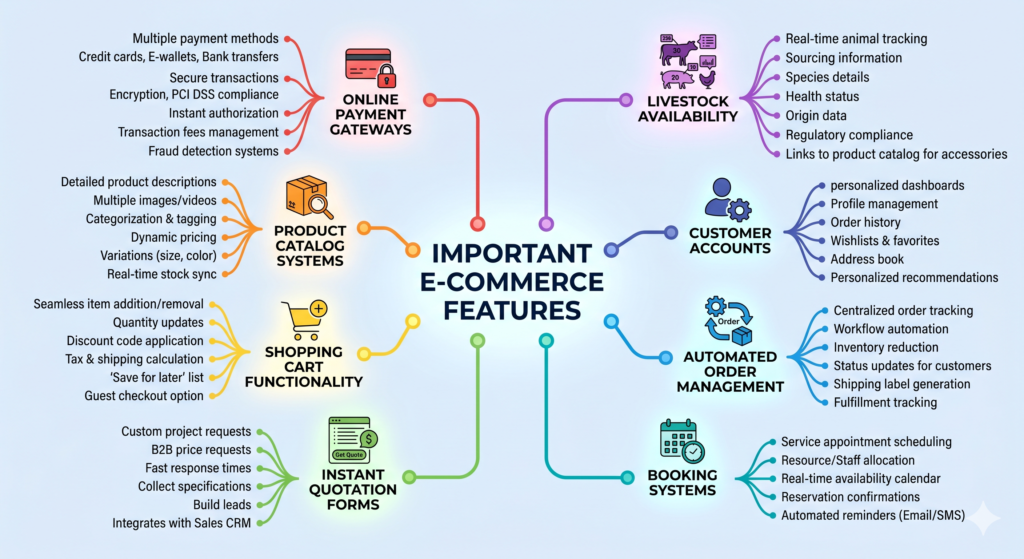
Some important e-commerce features include:
- Online payment gateways
- Instant quotation forms
- Product catalog systems
- Shopping cart functionality
- Booking systems
- Automated order management
- Customer accounts
- Livestock availability
These features help reduce friction during the buying process.
For example, instead of asking customers to message manually for pricing, a business can allow users to view packages directly on the website. This creates transparency and builds trust immediately.
At the same time, automation helps business owners reduce repetitive tasks and save time.
Why Malaysian SMEs Are Slowly Shifting Towards E-Commerce Websites?
The Malaysian digital market has become increasingly competitive.
Consumers are now more familiar with platforms like Shopee, Lazada, Grab, and Foodpanda. Because of this, users already expect convenience when visiting any business website.
If your website feels outdated or difficult to use, customers may assume your business is less professional than your competitors’.
This is why more SMEs in Malaysia are upgrading from traditional company websites to conversion-focused e-commerce websites.
Instead of simply introducing their business, they are building websites that can:
- Generate leads automatically
- Accept online payments
- Handle customer orders
- Support marketing campaigns
- Improve SEO visibility
- Increase long-term revenue
A website should no longer be treated as just an “online company profile.” It should become part of your business growth strategy.
SEO and E-Commerce Work Together

One major advantage of e-commerce websites is their SEO potential.
Unlike static company profile websites, e-commerce websites naturally create more indexable pages through:
- Product pages
- Category pages
- FAQ content
- Reviews
- Blog articles
- Search-friendly URLs
This gives Google more content to crawl and rank.
In addition, well-structured e-commerce websites often improve:
- User engagement
- Time spent on site
- Internal linking
- Conversion tracking
- Mobile experience
All of these factors contribute positively to search engine rankings.
Conclusion
In 2026, customers expect more than just a nice-looking website.
Businesses that continue relying on outdated brochure-style websites may struggle to compete in an increasingly digital market. Modern users want speed, convenience, transparency, and a seamless buying experience.
Adding e-commerce features can completely transform how your website performs. Instead of passively displaying information, your website becomes an active sales and conversion platform that works for your business 24/7.
For Malaysian SMEs looking to improve online visibility, customer trust, and long-term revenue, investing in a conversion-focused e-commerce website is no longer optional; it is becoming essential.