For years, businesses believed that having a “good website” simply meant having a visually attractive design.
As long as the homepage looked modern, animations were smooth, and the layout felt premium, the website was considered successful.
But in 2026, that mindset is rapidly becoming outdated.
Today, many businesses are facing the same frustrating issue: their websites look great, they have invested in SEO, yet they still struggle to rank on Google or generate consistent leads.
The reality is simple: AI is changing how search engines understand websites, and traditional web development is no longer enough.
Google Is No Longer Just a Traditional Search Engine
In the past, SEO was heavily focused on:
- Keywords
- Backlinks
- Meta tags
- Content frequency
These things are still important, but search engines are moving past keyword matching.
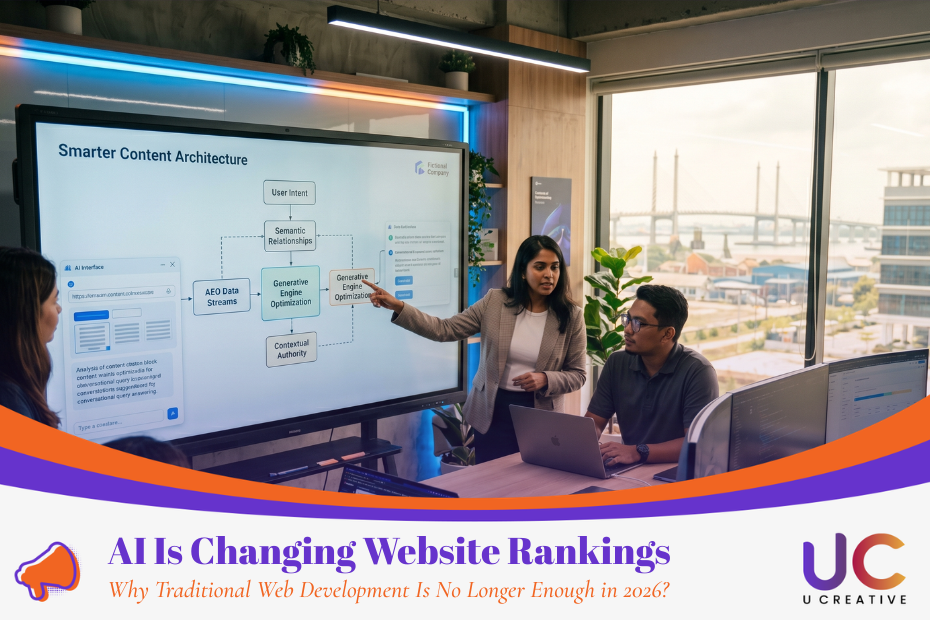
The ability to grasp semantics via AI is becoming increasingly crucial for platforms such as Google, ChatGPT, Gemini, and Perplexity.
Instead of only scanning for keywords, AI systems now attempt to understand:
- What your website is about
- How your pages connect
- Whether your content demonstrates authority
- If your site structure is easy to interpret
This means websites are no longer built only for users. They must also be built for AI interpretation.
Modern Web Development Is No Longer About Design Alone
Traditional web development mainly prioritized:
- UI design
- Visual effects
- Interactive animations
- Aesthetic layouts
But today’s websites are increasingly appraised on their structure, rather than their looks.
AI Search, indeed, would be like well-organized, easy-to-grasp webpages.
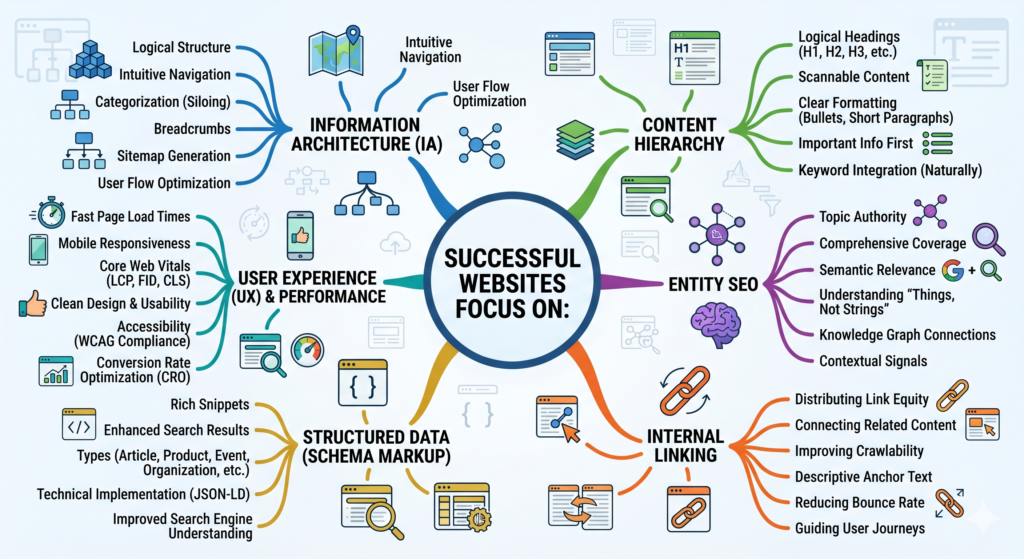
For example, a visually impressive website with weak content structure may perform worse than a simpler website with:
- Clear topical authority
- Well-organized content clusters
- FAQ structures
- Proper schema markup
- Strong internal linking
This is one reason why many “simple-looking” websites now outrank more expensive designs.
AEO and GEO Are Reshaping SEO
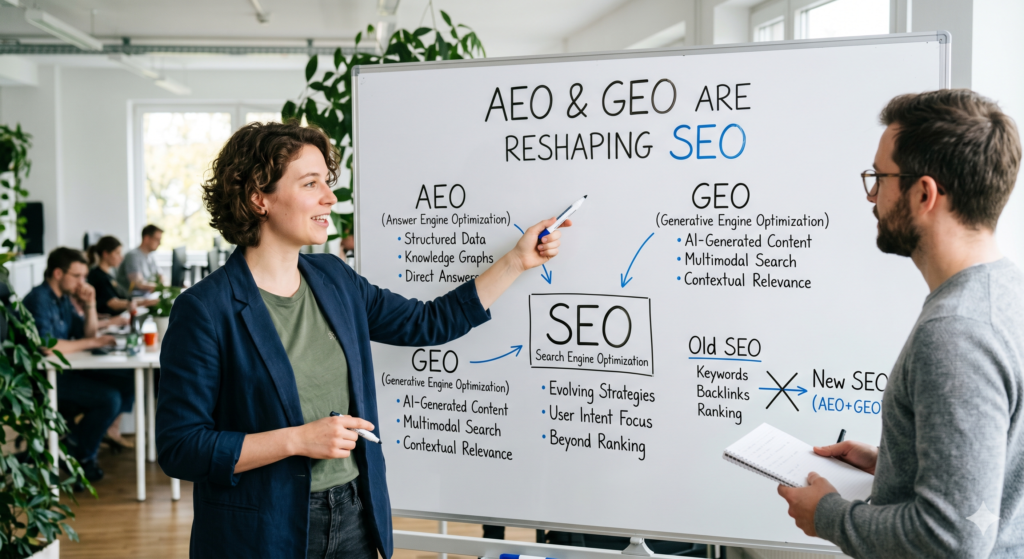
A growing number of SEO professionals are now shifting their focus toward:
- AEO (Answer Engine Optimization)
- GEO (Generative Engine Optimization)
Traditional SEO focused on helping search engines find your website.
AEO and GEO focus on helping AI systems understand and reference your content.
This shift is critical because modern users increasingly rely on AI-generated answers instead of browsing multiple search results.
In many cases, users receive answers directly from AI tools without even visiting websites.
As a result, websites that fail to provide AI-friendly structures may gradually lose visibility.
Why Many Business Websites Are Losing Rankings?
Many company websites struggle because they were developed with outdated priorities.
1. Too Much Focus on Visual Design
Many websites are like digital brochures. They seem appealing but offer no educational depth. Expertise is unknowable in AI systems without relevant authority.
2. Weak Page Relationships
Search engines and AI rely heavily on contextual relationships between pages.
If your website lacks:
- Topic clusters
- Internal linking
- Content hierarchy
AI may struggle to determine which pages are most important.
3. Lack of EEAT Signals
Google increasingly values:
- Experience
- Expertise
- Authoritativeness
- Trustworthiness
Websites without strong EEAT signals are less likely to be referenced by AI-driven search systems.
The Future of Web Development Is AI-Friendly Architecture
In 2026 and beyond, successful websites must satisfy both:
- Human users
- AI systems
This means businesses need websites that can:
- Rank on Google
- Be understood by AI
- Convert visitors into leads
- Build long-term authority
Modern web development is no longer just a design service. It has become part of a broader digital growth strategy.
How U Creative Builds AI-Friendly Websites
At U Creative, we believe modern websites should be designed with both SEO and AI visibility in mind. Our web development approach focuses on:
- SEO-ready website structures
- AI-friendly content architecture
- EEAT-based content strategies
- High-converting user experiences
- Core Web Vitals optimization
- Smart internal linking systems
Because in the future, the most successful websites won’t be the most beautiful. They will be the ones AI can understand the best.