When businesses in Malaysia look for a new website, one question appears almost immediately:
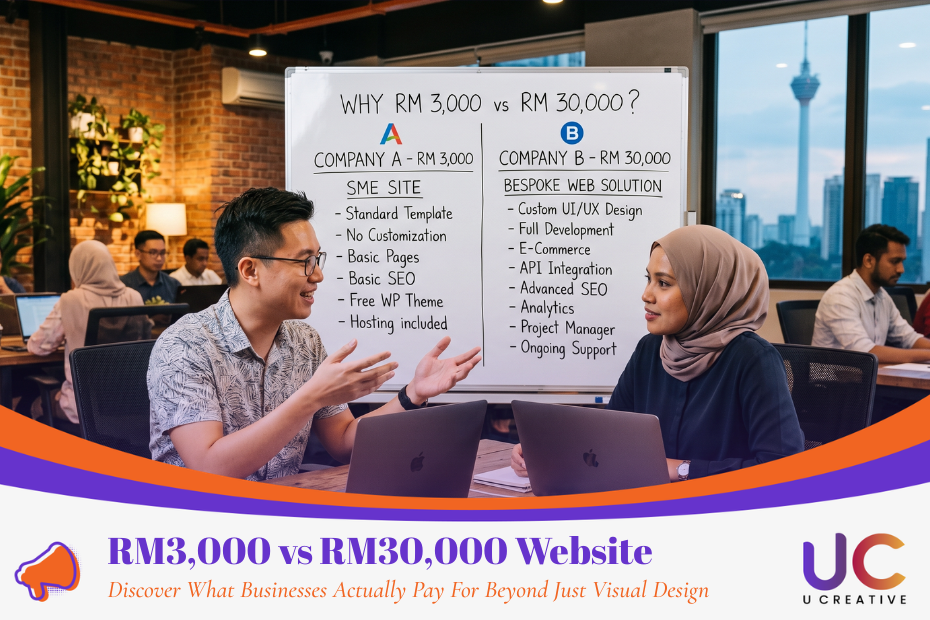
“Why does one company charge RM3,000 while another charges RM30,000 for a website?”
At first glance, both websites may look visually attractive. Both may include modern layouts, mobile responsiveness, and contact forms. However, the real difference between a low-cost website and a high-investment website is usually not about appearance alone.
The biggest difference lies in strategy, performance, scalability, and business impact.
Today, a website is no longer just an online company profile. It has become a digital sales system, a lead generation tool, and a key asset for long-term brand growth.
This is where many businesses misunderstand website pricing.
A RM3,000 Website Usually Focuses on “Presence”
Most lower-cost websites are built using ready-made templates with minimal customization. Their main objective is simple: help a business establish an online presence quickly and affordably.
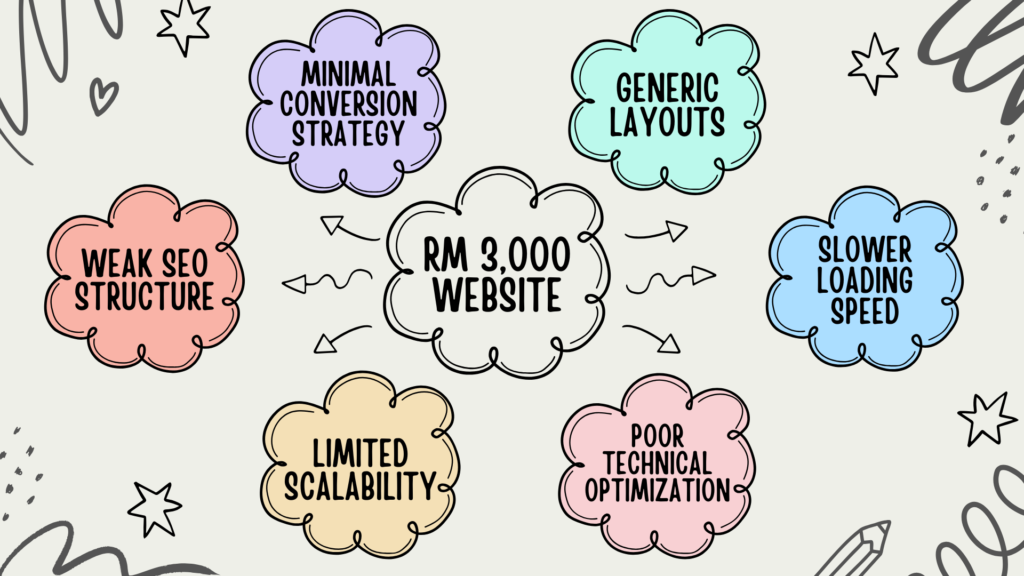
For some startups or newly established businesses, this can still be a practical option. However, these websites are often limited in several important areas:
- Weak SEO structure
- Minimal conversion strategy
- Generic layouts
- Slower loading speed
- Limited scalability
- Poor technical optimization
Many cheap websites are built with a “design-first” mindset instead of a “business-first” strategy.
This means the website may look decent visually, but it may struggle to rank on Google, generate inquiries, or convert visitors into customers.
In many cases, businesses eventually spend more money rebuilding their websites after realizing they cannot support long-term growth.
A RM30,000 Website Is Usually Built Around Business Objectives
On the other hand, higher-budget websites are typically developed through a more rigorous strategic process.
Instead of only asking: “What design do you want?”
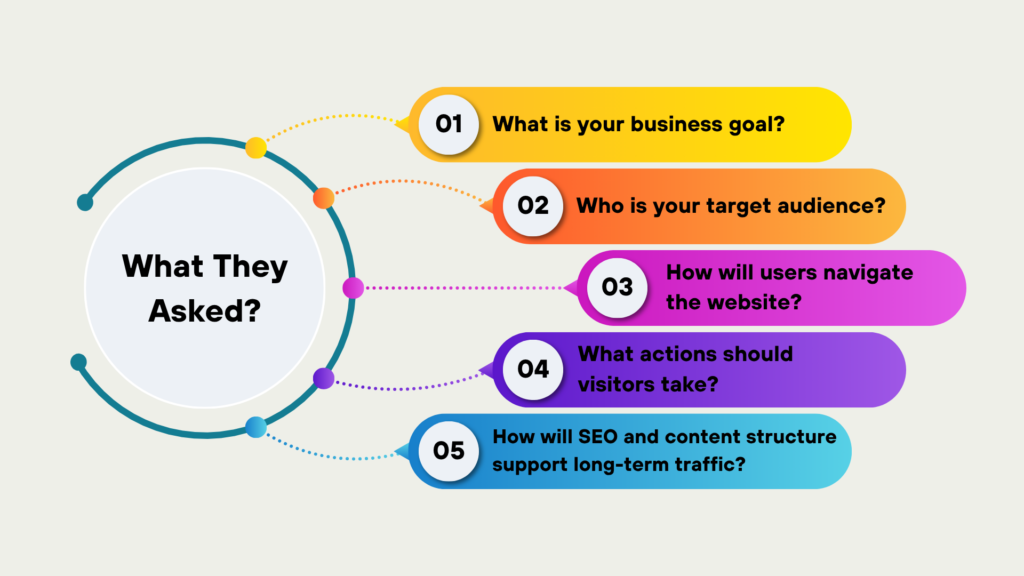
Professional developers and strategists will ask:
- What is your business goal?
- Who is your target audience?
- How will users navigate the website?
- What actions should visitors take?
- How will SEO and content structure support long-term traffic?
This is where the investment begins to make sense.
A professionally developed website often includes:
SEO-Ready Architecture
An SEO-friendly website development approach ensures the site structure is optimized for Google to crawl and index from the beginning. This includes:
- Proper heading hierarchy
- Schema markup
- Optimized page speed
- Internal linking structure
- Mobile-first performance
- Technical SEO foundations
Without these elements, even beautiful websites may struggle to rank competitively.
For businesses targeting organic traffic, investing in proper Google optimization becomes critical.
Performance Directly Impacts Conversion
One major difference many businesses overlook is website performance.

A slow-loading website can significantly increase bounce rates and reduce user trust. Research consistently shows that users expect websites to load within a few seconds.
High-budget websites often include:
- Image optimization
- Better hosting infrastructure
- Performance-focused coding
- Core Web Vitals optimization
- Advanced caching systems
These technical improvements may not always be visually obvious, but they directly impact SEO rankings and lead generation performance.
Cheap Websites Can Become Expensive Later
One hidden issue with low-cost website development is the cost of rebuilding.
Many SMEs initially opt for cheaper solutions to reduce upfront costs. However, as the business grows, they discover limitations such as:
- Difficult backend management
- Weak SEO capabilities
- Poor scalability
- Outdated structure
- Limited integrations
Eventually, they need to redesign or redevelop the entire website.
In reality, this often results in higher long-term costs compared to investing in a stronger foundation from the beginning.
The Right Website Depends on Your Business Goals
This does not mean every business needs an RM30,000 website immediately.
The real question is: “What role does the website play in your business?”
If your website is only meant to provide basic company information, a smaller investment may be sufficient. However, if your business relies on:
- Google traffic
- Lead generation
- Brand authority
- Online inquiries
- Digital marketing campaigns
- SEO growth
Then your website should be treated as a long-term business asset rather than a short-term design project.
This is why many companies today prioritize strategic UCreative web development services in Malaysia that combine SEO, UX, performance, and conversion optimization.
Conclusion
At the end of the day, the difference between an RM3,000 and an RM30,000 website is rarely just about design. It is about:
- Strategy
- SEO readiness
- User experience
- Performance
- Scalability
- Conversion capability
A website should not only look professional. It should help your business grow.