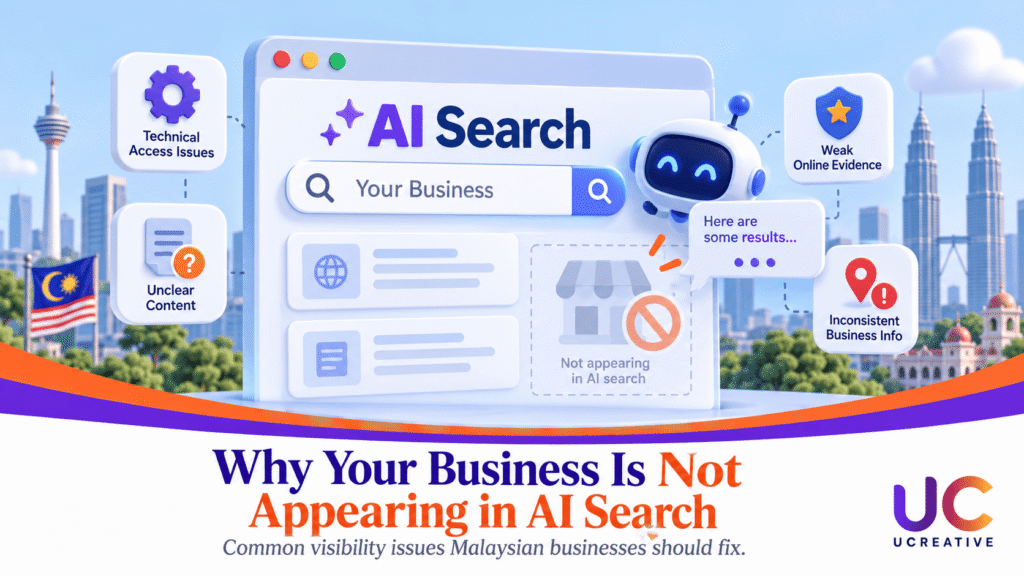
If your business is missing from ChatGPT or Google AI search, the platform may be unable to access your website, understand what you offer or find enough reliable information to support a recommendation.
The problem is rarely solved by adding a few AI-related keywords or creating an llms.txt file. Businesses usually need to strengthen the same foundations that support good SEO: crawlable pages, clear service information, useful content, consistent company details and credible evidence.
It is also important to set the right expectation. No business can guarantee inclusion in an AI-generated answer. ChatGPT, Gemini and Google AI features may produce different results depending on the question, location, platform, available sources and time of testing.
Before making changes, determine what type of visibility is missing.
Is the Problem Recognition, Citation or Recommendation?
These are three different outcomes:
| Visibility Level | What It Means | Example |
|---|---|---|
| Recognition | The AI system can identify your business | It correctly states your services and location |
| Citation | The system uses your website as a source | A page from your website appears as a supporting link |
| Recommendation | The business appears in an unbranded suggestion | Your company is included when someone asks for suitable providers |
A business may be recognised correctly but never cited. It may also be cited for useful information without being recommended as a service provider.
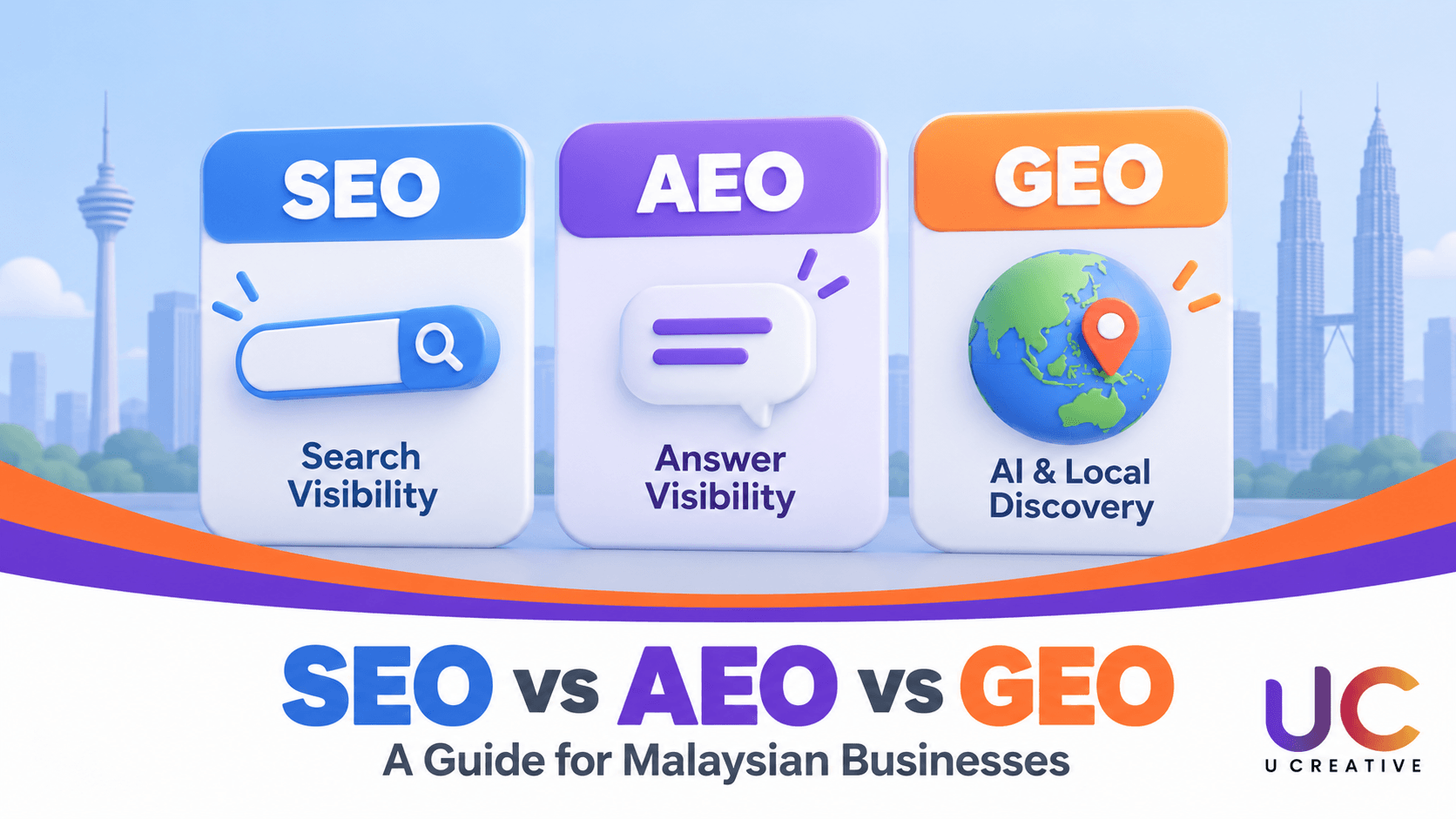
Understanding how SEO, AEO and GEO work together makes these differences easier to diagnose. Incorrect company information may point to a clarity or consistency issue, while missing citations can indicate weak content or limited crawl access. If the business is recognised but rarely recommended, relevance, evidence, reputation or competition may be the stronger factors.
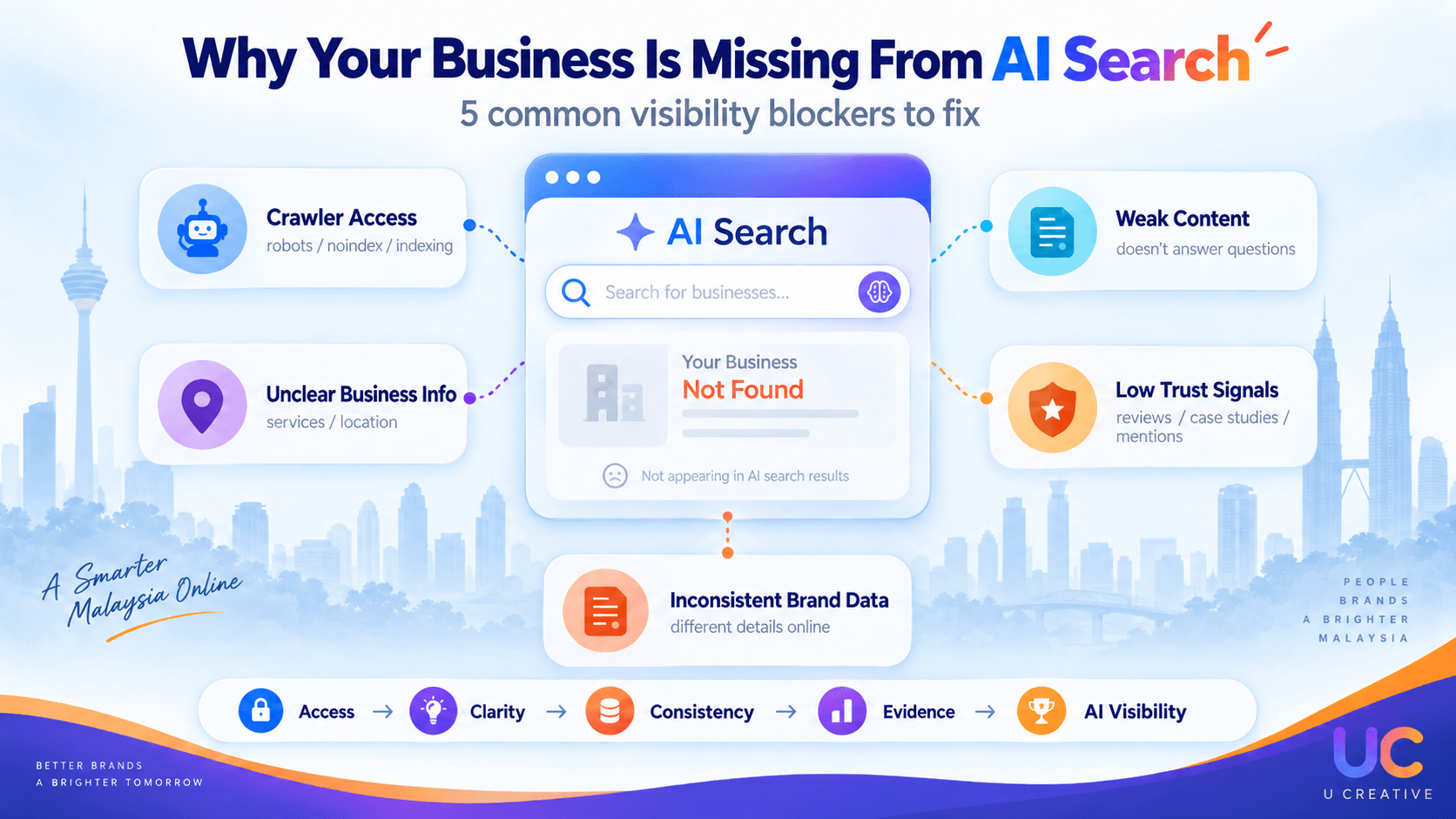
1. AI Search Crawlers Cannot Access Your Website
Your content cannot be considered if the relevant system cannot access it.
For Google AI Overviews and AI Mode, supporting pages must be indexed and eligible to appear in Google Search with a snippet. Google says that its normal SEO requirements still apply and that there are no additional technical requirements for these AI features.
ChatGPT search uses a crawler called OAI-SearchBot to surface websites in search results. OpenAI recommends allowing OAI-SearchBot in robots.txt if you want your website to be eligible for ChatGPT search. This is separate from GPTBot, which is associated with potential model training.
Check whether:
- Important pages are blocked in
robots.txt - A firewall or CDN is blocking legitimate crawlers
- Pages contain a
noindexdirective - Important content only appears after scripts fail to load
- Canonical tags point to another URL
- Service pages are missing from internal navigation
Allowing access does not guarantee inclusion, but blocking the relevant crawler can prevent a page from being considered.
If your pages are already accessible but still missing from Google, investigate why they may be crawled but not indexed.
2. Your Website Does Not Clearly Explain the Business
Many company websites use broad statements such as “innovative solutions”, “trusted partner” or “quality service” without explaining what the company actually does.
A useful service page should make the following clear:
- What the company provides
- Who the service is for
- Which locations it serves
- Which industries or problems it specialises in
- What makes the service relevant to the customer
- How a customer can enquire or request a quotation
For example, “We provide engineering solutions” is too vague. “We provide precision machining for Malaysian manufacturers that require low-volume industrial parts” gives users and search systems much more context.
If a potential customer cannot quickly understand your offer, an AI system may also struggle to represent it accurately.
3. Your Business Information Is Inconsistent
Company details should be reasonably consistent across your website and important public profiles. This includes:
- Business name
- Address and service area
- Contact details
- Main services
- Industry positioning
- Short company description
Minor wording differences are normal. The problem arises when one source describes the company as a web developer, another presents it as a social media agency and the website positions it as an SEO specialist without explaining how these services connect.
Review your homepage, About page, Google Business Profile, LinkedIn company page, relevant directories and association profiles. Update outdated descriptions rather than creating more profiles that cannot be maintained.
Consistency does not force an AI platform to mention the brand. It simply reduces conflicting information and makes the business easier to verify.
4. Your Content Is Too General to Answer Real Questions
Publishing more content is not automatically the solution. A website can have dozens of articles and still provide little information that helps a customer make a decision.
Strong content addresses specific questions such as:- Which service is suitable for my situation?
- How much does it cost?
- What affects the price or timeline?
- What is included in the service?
- How does one option compare with another?
- Is the provider suitable for my industry or location?
Give the direct answer near the beginning, then explain the conditions, exceptions and evidence. This improves readability without reducing every topic to a shallow summary.
For a Penang B2B manufacturer, an article answering “What information is needed for a precision machining quotation?” may be more useful than another broad article titled “Benefits of Precision Machining”.
5. Important Claims Are Not Supported by Evidence
AI-friendly formatting cannot turn unsupported marketing claims into credible information.
If a website says a company is “the best”, “industry-leading” or “trusted by thousands”, readers need a reason to believe it. Useful supporting evidence may include:- Detailed case studies
- Named certifications or accreditations
- Original research or data
- Clear author or reviewer credentials
- Customer reviews
- Project examples
- Transparent service information
- Awards that can be independently verified
Evidence should be specific and relevant. A generic testimonial may support customer satisfaction, but it does not prove technical expertise in every industry.
For B2B companies, case studies can be particularly useful when they explain the original problem, the work completed and the measurable outcome without revealing confidential information.
6. There Is Little Independent Information About the Brand
Your website is the main source for explaining your services, but it is also controlled by your company. Independent sources can provide additional context about where the business operates and how others describe it.
Relevant sources may include:- Genuine customer reviews
- Industry association listings
- Partner or supplier pages
- Local business directories
- Interviews or expert contributions
- Relevant media coverage
- Event, award or certification pages
The objective is not to place the company name on as many websites as possible. Low-quality directory submissions, paid mentions and promotional comments can create noise without building meaningful credibility.
Community platforms such as Reddit, LinkedIn or industry forums can be useful when a representative provides a genuinely helpful answer and clearly discloses their affiliation. They should not be treated as places to insert artificial recommendations or undisclosed promotions.
7. Your Test Questions Are Too Broad
A small local business is unlikely to appear consistently for a broad request such as:
Recommend the best digital marketing agencies.
The question gives the system little context about location, budget, industry or required services. A more realistic customer question might be:
Which digital marketing agencies in Penang provide both SEO and website development for Malaysian SMEs?
This does not mean businesses should optimise only for one carefully written prompt. It means AI visibility should be tested across questions that reflect real customer needs.
Create a small set of prompts covering:
- Branded recognition
- Service and location searches
- Industry-specific requirements
- Comparisons and buying questions
- Problems your service solves
Use the same prompts when monitoring progress. Record the platform, date, exact wording, brands mentioned and sources cited. One positive result should not be treated as a permanent AI ranking.
A Practical Plan to Improve AI Search Visibility
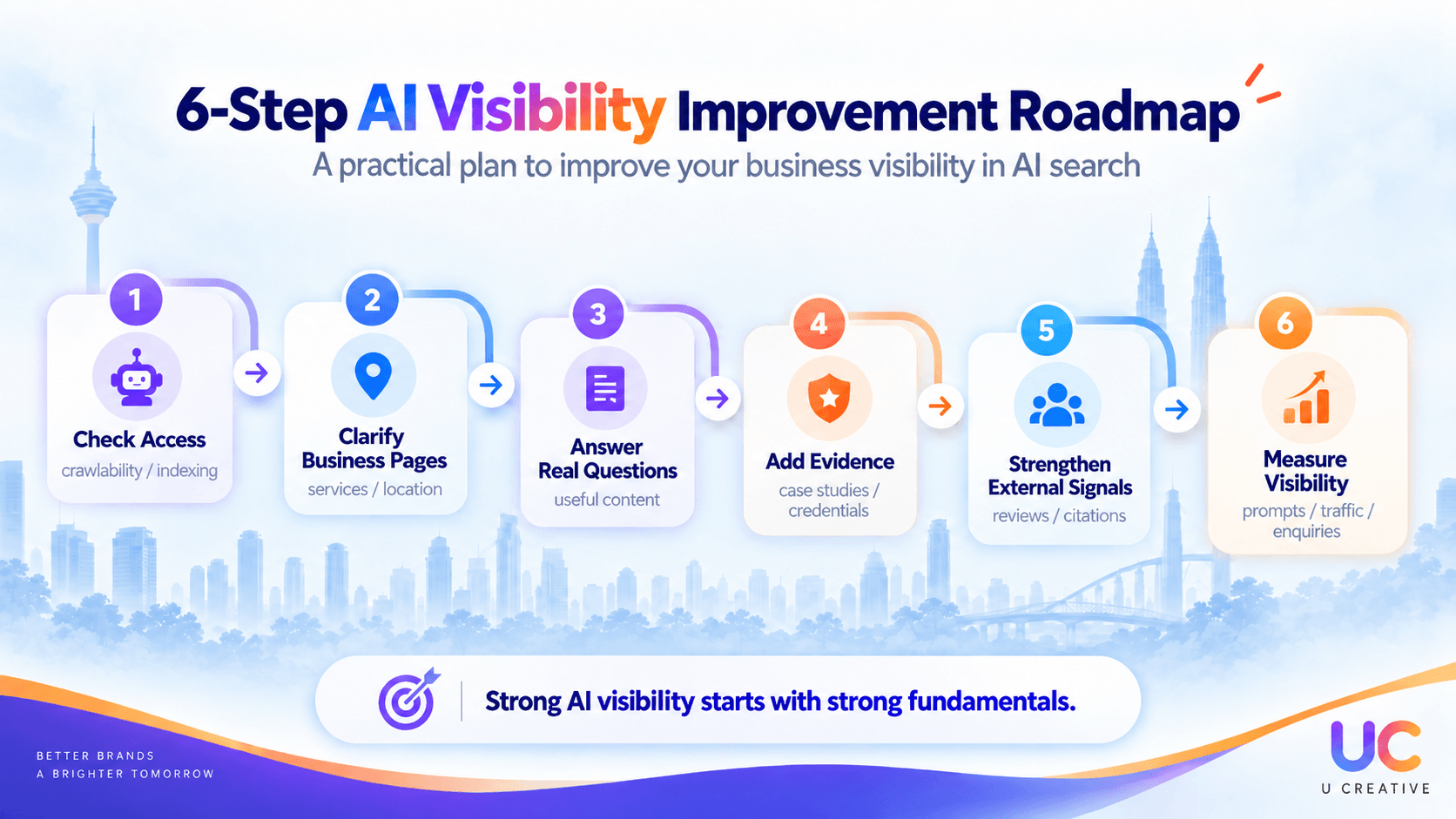
Work through the fundamentals in this order:
Step 1: Check Technical Access
Confirm that Google and OAI-SearchBot can access important pages. Review indexing, robots directives, canonicals, server responses and internal links.
Step 2: Strengthen Core Business Pages
Make the homepage, About page, service pages and location information clear. Each important service should have enough detail to stand on its own.
Step 3: Answer Specific Customer Questions
Create content based on actual buying concerns, not only broad keywords. Give concise answers first and provide useful detail below.
Step 4: Add Verifiable Evidence
Support claims with case studies, credentials, project examples, original insights and transparent business information.
Step 5: Improve External Consistency
Correct outdated business profiles and pursue relevant third-party coverage or mentions. Prioritise sources that real customers would trust.
Step 6: Measure Visibility and Business Results
Track brand mentions and cited pages across a controlled prompt set. Combine this with organic traffic, enquiries, calls and conversions. Visibility is only valuable when it supports genuine business goals.
What Not to Rely On
Several tactics are commonly promoted as shortcuts to AI visibility, but none should replace a sound website and credible business information.
An llms.txt File Alone
An llms.txt file may be used voluntarily to summarise or point towards content, but it is not a universal requirement for AI search visibility. Google explicitly states that no special AI text file is required for AI Overviews or AI Mode. OpenAI’s published search guidance focuses on allowing OAI-SearchBot.
Schema Markup Alone
Structured data can help search engines understand information, but it must match the visible page. There is no special schema that guarantees inclusion in Google AI features.
Mass-Produced AI Articles
Publishing a large volume of generic content can create duplication and make the website less useful. Focus on original information, real expertise and questions relevant to your customers.
Fake Reviews or Promotional Community Posts
Manufactured reviews and undisclosed promotions can damage trust. Participate in relevant communities to provide value, not to simulate independent recommendations.
Find Out What Is Limiting Your AI Visibility
If your business is missing from ChatGPT or Google AI search, the first step is to identify where the problem begins. It may involve crawler access, unclear service information, weak supporting evidence or inconsistent brand details across the web.
U Creative helps businesses across Malaysia, including those in Penang, Kuala Lumpur and Selangor, identify what may be limiting their search and AI visibility. Our SEO team can identify whether technical access, unclear content, inconsistent brand information or limited authority may be affecting how the business appears online.
Frequently Asked Questions (FAQs)
Can I Submit My Business Directly to ChatGPT or Google AI?
There is no general submission form that guarantees a business mention, citation or recommendation. Your website must be accessible and provide clear, useful and reliable information that the platform can consider.
Will Blocking GPTBot Stop My Website From Appearing in ChatGPT Search?
Not necessarily. GPTBot is used for content that may support OpenAI’s model training, while OAI-SearchBot is used to surface websites in ChatGPT search. According to OpenAI’s crawler documentation, these controls are separate.
Do I Need an llms.txt File to Appear in AI Search?
No. An llms.txt file is not a universal requirement for appearing in ChatGPT or Google AI search. Google confirms that no special AI text file is required for AI Overviews or AI Mode, while OpenAI’s search guidance focuses on allowing OAI-SearchBot.
Does Schema Markup Guarantee AI Visibility?
No. Structured data may help search engines understand information when it matches the visible page, but it does not guarantee an AI mention, citation or recommendation. There is also no special schema required for Google AI Overviews or AI Mode.
How Long Does It Take for a Business to Appear in AI Search?
There is no fixed timeline. Results depend on crawler access, indexing, content quality, brand information, external sources, competition and how each platform retrieves or updates information.