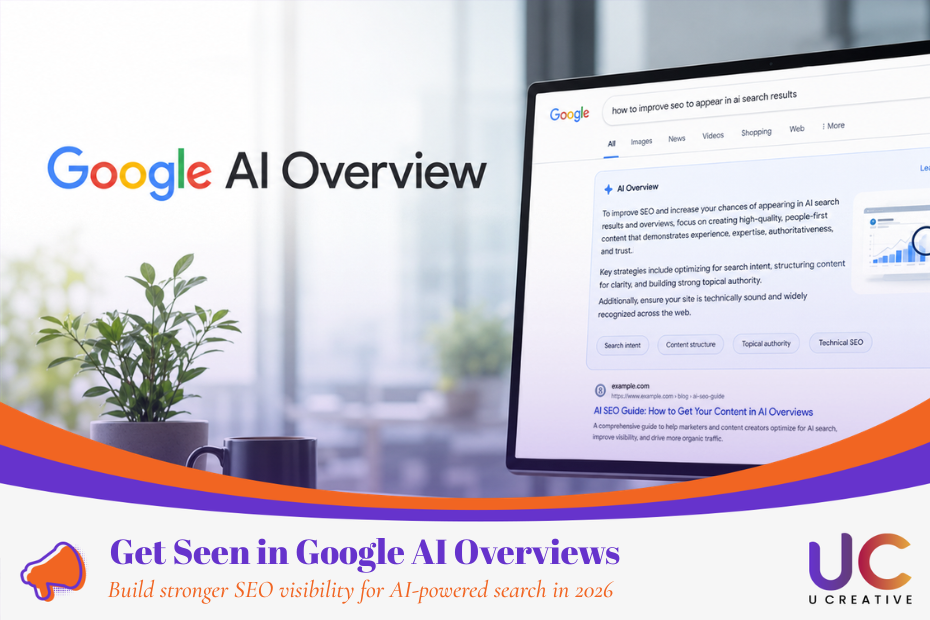
Google Search is no longer limited to displaying ten traditional organic results. With AI Overviews and AI Mode, Google can generate an answer, compare information from multiple sources, and recommend supporting pages directly within the search experience.
For businesses, this creates a new SEO objective: your website should not only rank in conventional search results but also become a useful source that Google’s AI systems can retrieve, understand and reference.
However, appearing in a Google AI Overview is not achieved through a special trick, AI-only schema or a separate “AI ranking formula.” Google states that AI Overviews and AI Mode are still built on its core Search ranking and quality systems. The fundamentals of SEO therefore remain essential in 2026.
This guide explains how to optimize your website for AI search visibility while continuing to attract qualified organic traffic, inquiries, and sales.
What Are Google AI Overviews?
Google AI Overviews are AI-generated summaries that may appear above or among traditional search results. They are designed to help users understand complex topics quickly while providing links to supporting websites.
AI Mode supports more detailed searches, including comparisons, follow-up questions, and queries that may previously have required several separate searches.
Google may use a process known as query fan-out, where its systems run multiple related searches to understand different parts of a user’s question. As a result, a page may appear as a supporting source even when it does not match the user’s original wording exactly.
“Which digital marketing strategy is best for a Malaysian SME with a limited budget?”
may trigger related searches about:
- SEO costs in Malaysia
- Google Ads versus SEO
- lead-generation strategies
- digital marketing packages
- expected marketing return on investment
A website that covers these connected questions clearly may have more opportunities to appear across the AI-generated response.
Can You Guarantee a Position in Google AI Overviews?
No SEO agency, consultant, or software provider can guarantee inclusion in an AI Overview.
A page must first be indexed and eligible to appear in Google Search with a snippet. Even when a page follows Google’s technical requirements and content guidelines, Google does not guarantee that it will crawl, index or display the page.
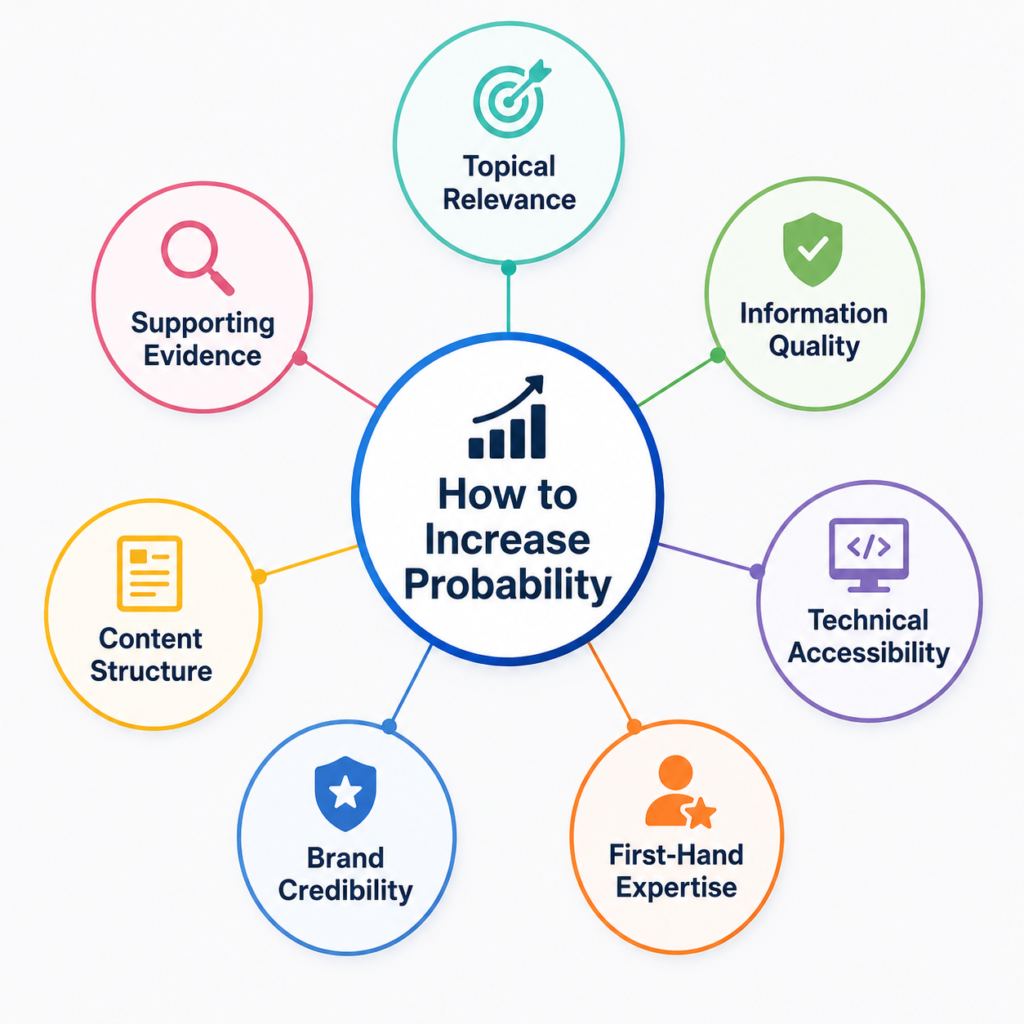
The practical goal is therefore not to “force” Google to cite a page. It is to increase the probability that the page will be selected by improving:
- topical relevance;
- information quality;
- technical accessibility;
- first-hand expertise;
- brand credibility;
- content structure;
- supporting evidence.
How to Optimize for Google AI Overviews in 2026?
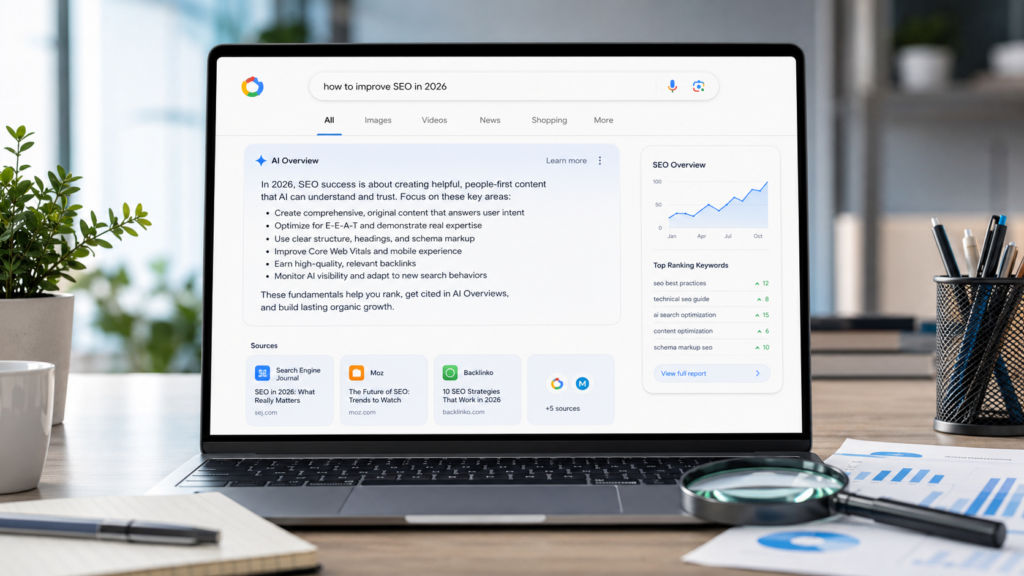
1. Create Content that Directly Solves Search Intent
AI search optimization begins with understanding what the user is trying to accomplish.
A person searching for “SEO services Malaysia” may be looking for a provider. Someone searching for “SEO package Malaysia price” is probably comparing costs. A search for “why is my website not appearing in Google AI Overview” indicates a troubleshooting need.
Each page should therefore focus on a clearly defined intent rather than covering a broad topic without delivering a practical answer.
A high-performing service article should be able to fulfill users’ intents and ensure their curiosities are satisfied.
Place the primary keyword naturally in the SEO title, H1, introduction, and relevant subheadings. Google’s Search Essentials recommends using the words people search for in prominent locations such as the title, main heading, alt text, and internal-link anchor text.
2. Provide Non-Commodity Information
Generic content is becoming easier for both businesses and AI tools to produce. Repeating information already available across hundreds of websites gives Google little reason to select your page as a supporting source.
Google’s 2026 guidance recommends producing non-commodity content with original expertise, first-hand experience, and a point of view that cannot be easily copied or generated from common knowledge.
Instead of publishing another article titled “10 Benefits of SEO,” create something more specific, such as:
“What We Found After Auditing 30 Malaysian SME Websites for AI Search Readiness”
The second topic offers experience, evidence, and a distinctive reason for users and AI systems to reference it.
3. Answer the Main Question Early
Do not make readers scroll through a long introduction before receiving an answer.
Under each important heading, provide a concise answer first. You can then explain the reasoning, examples, limitations, and recommended actions.
For example:
How do websites appear in Google AI Overviews?
Websites become eligible by being indexed, accessible to Google, and relevant to the user’s query. Strong technical SEO, useful content, and clear supporting information can improve the possibility of being selected, but inclusion is not guaranteed.
This answer-first structure improves readability and helps users quickly identify the information they need. It is useful for AI search, featured snippets, and conventional organic results without requiring unnatural “AI writing.”
Google also states that websites do not need to rewrite every page into small content chunks. There is no required page length or special AI-specific writing format.
4. Strengthen Experience, Expertise, Authority and Trust
Google evaluates signals associated with experience, expertise, authoritativeness and trustworthiness, commonly referred to as E-E-A-T. These signals are particularly important when users need reliable information before making a financial, medical or business decision.
For commercial pages, avoid unsupported claims such as “Malaysia’s number-one SEO agency” unless the statement can be independently verified.
A credible explanation supported by evidence is more valuable than an exaggerated marketing claim.
5. Build Complete Topic Clusters
Because AI search may explore several related subtopics, isolated articles are often insufficient.
These articles should internally link to one another and direct commercially ready visitors toward the relevant service page.
Businesses that need support with technical optimization, content strategy and organic lead generation can explore U Creative’s SEO services in Malaysia.
This internal link is relevant because it gives readers a logical next step rather than interrupting the article with a hard-sales message.
6. Make Important Information Crawlable
Google’s AI features rely on content that Google can crawl, index, and retrieve from its Search index.
Your website should also perform properly on mobile devices, load efficiently and clearly separate its main content from pop-ups, advertisements and distracting page elements.
Google confirms that there are no additional technical requirements specifically for AI Overviews. The same crawling, indexing and page-experience principles used in conventional technical SEO continue to apply.
7. Use Structured Data Correctly
Structured data can help Google understand information about an article, organization, product, service or local business. It can also make eligible pages available for supported rich-result formats.
However, structured data is not a direct requirement for appearing in Google AI Overviews, and there is no special AI Overview schema.
Ensure the structured data accurately reflects information visible on the page. Google recommends validating applicable markup and checking the published URL through Search Console.
An FAQ section can still improve usability and topical coverage. However, Google generally limits visible FAQ rich results to authoritative government and health websites, so commercial websites should not treat FAQ schema as a guaranteed search feature.
8. Keep Business and Local Information Consistent
AI-generated results may include information about local companies, services, and products.
For ecommerce businesses, accurate product information and Merchant Center feeds may create additional visibility opportunities across both traditional and AI-powered Google experiences.
Conclusion
Appearing in Google AI Overviews in 2026 is not about discovering a hidden optimization hack.
The strongest strategy is to publish original, trustworthy, and commercially useful content; make it easy for Google to crawl and understand; demonstrate genuine expertise; and build comprehensive coverage around the questions your customers ask before making a decision.
Businesses that invest in these fundamentals can improve their visibility across traditional results, AI Overviews and AI Mode while also creating a stronger website experience for potential customers.
FAQ
How can I get my website into Google AI Overviews?
Make sure your page is indexable, eligible to appear in Google Search, and useful for the relevant query. Improve technical SEO, answer the user’s question clearly, include original expertise, and support important claims with credible evidence. Inclusion cannot be guaranteed.
Do I need special schema for Google AI Overviews?
No. Google does not require a special AI Overview or GEO schema. Continue using relevant structured data such as Article, Organization, LocalBusiness, Product, and Breadcrumb markup where applicable.
Can AI-generated content rank in Google?
Yes. AI-assisted content can rank when it is helpful, accurate, original, and created for users. Publishing large amounts of unoriginal content primarily to manipulate rankings may violate Google’s scaled-content-abuse policy.
How long does AI SEO take to produce results?
There is no fixed timeline. Results depend on the website’s authority, technical condition, competition, content quality and crawl frequency. Some improvements may be discovered quickly, while broader organic visibility can require several months of consistent work.